
No products
Why Aerate a Young Wine?
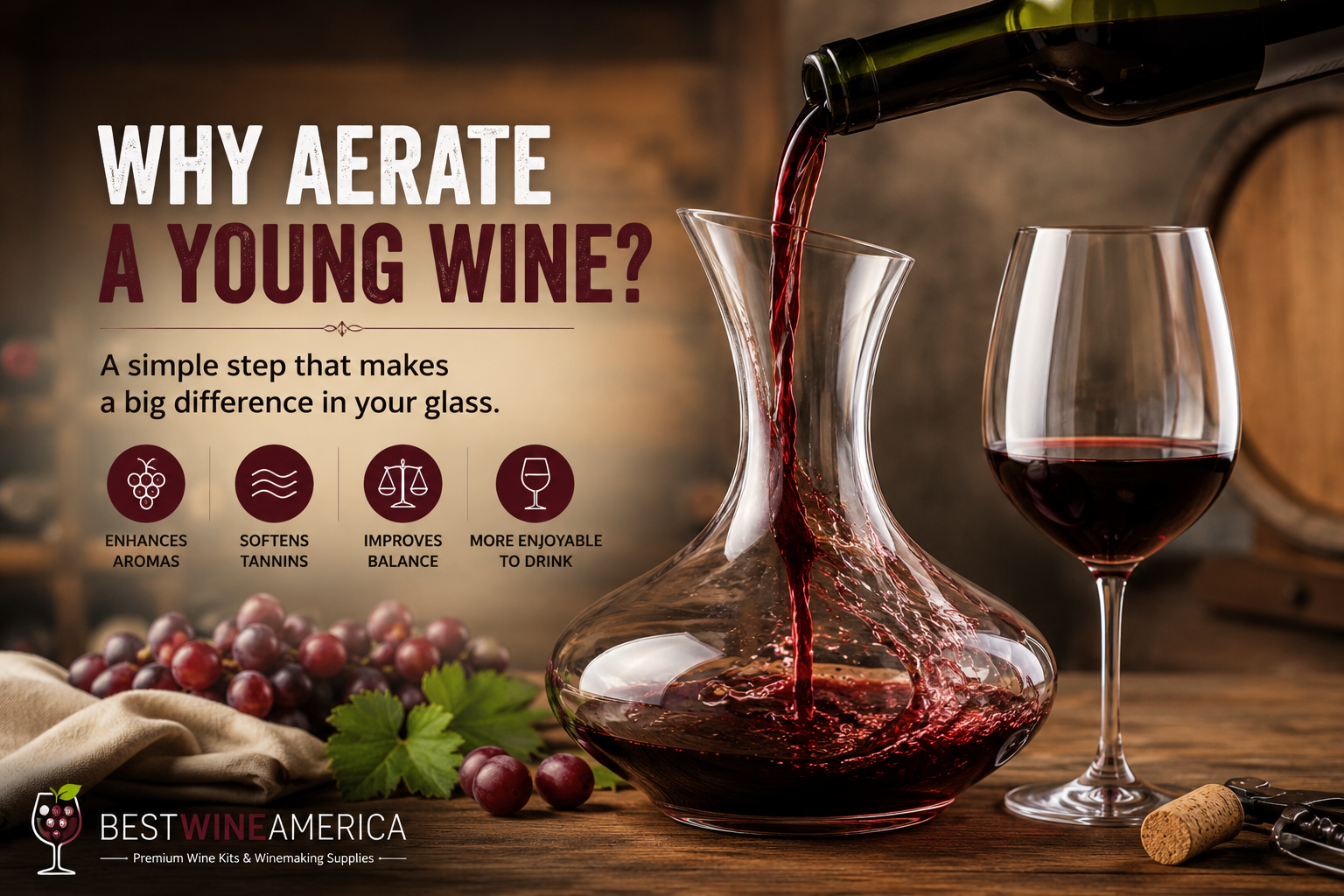
Many wine enthusiasts wonder whether a young wine should be aerated before serving. The answer is often yes. Aeration allows wine to interact with oxygen, helping to soften tannins and release aromas that may be hidden immediately after opening the bottle.
What Does Aeration Do?
When a wine is exposed to air, small amounts of oxygen begin to interact with the wine. This process can make a young wine taste smoother, less aggressive, and more expressive.
- Enhances aromas and bouquet
- Softens harsh tannins
- Improves overall balance
- Makes young wines more enjoyable to drink
Which Wines Benefit Most?
Young red wines generally benefit the most from aeration. Varieties such as Cabernet Sauvignon, Merlot, Syrah, and Malbec often become more approachable after 30 to 60 minutes of exposure to air.
Some full-bodied white wines can also benefit from brief aeration, although the effect is usually less noticeable than with red wines.
How to Aerate Wine
There are several simple ways to aerate wine:
- Pour the wine into a decanter
- Swirl the wine in a glass
- Use a wine aerator
- Open the bottle 30 to 60 minutes before serving
Can You Aerate Too Much?
Yes. While young wines often improve with aeration, older wines can lose delicate aromas if exposed to too much oxygen. Mature wines should generally be aerated for a shorter period of time.
Final Thoughts
Aerating a young wine is one of the easiest ways to improve your tasting experience. By allowing the wine to breathe, you can reveal more aromas, soften tannins, and enjoy a smoother, more balanced wine.
Looking to make your own wine at home? Explore the selection of wine kits and home winemaking products available from BestwineAmerica.